The line reached 5,000+ drones a month in three months. How: an experienced team, processes from day one, a 33-drones-per-hour standard and three levels of quality control
5,000 drones a month is not a "big workshop" – it is a different type of organization, where quality rests on process rather than on individual heroes. Our line went from its first assemblers to serial volumes in three months. Here is what made it happen this fast, what broke along the way, and why exactly those breakdowns shaped the production the customer sees today.
Where we started
The line did not start from zero experience. The core of the team came from people who had already been assembling drones at other companies in the industry – and who were not happy with the conditions there. So the first bottleneck turned out to be neither hiring nor training from scratch: skilled people had to be merged into one process, finding the balance where everyone's experience feeds a shared pace instead of producing "their own version" of the product.
This is where the company's managerial background – IT outsourcing – paid off. It brought an understanding of what experienced people actually want: a flexible schedule, for example. If an assembler prefers working 10 to 19 instead of 8 to 17, that is their right, as long as productivity and output hold. For a manufacturer competing for skilled hands, this proved to be a tool rather than a perk: keeping people is cheaper than constantly searching for new ones.
What broke during growth
A common mistake is to assume that when batches grow, the main risk sits in the assembly itself. In practice, assembly breaks last. Adjacent things break first – and in our case, it was supply.
Parts did not arrive all at once. For a small workshop that is a non-issue: wait, then build. For a line running to a standard, it is a downtime threat, and the only answer is restructuring processes on the fly: if a missing item blocks the full cycle, the line switches to what can be assembled. There were days when the entire team was building frames, because frames were what the warehouse had in full. A habit born out of necessity later became an advantage: the line knows how to reschedule operations around the actual availability of components – without stopping.
What keeps quality at scale
"If you scale chaos, you get scaled chaos. That is why we started with processes," is how the KRYLACHI head of production puts it. Processes were built from day one, not after reaching volume – and today three things hold quality on the line.
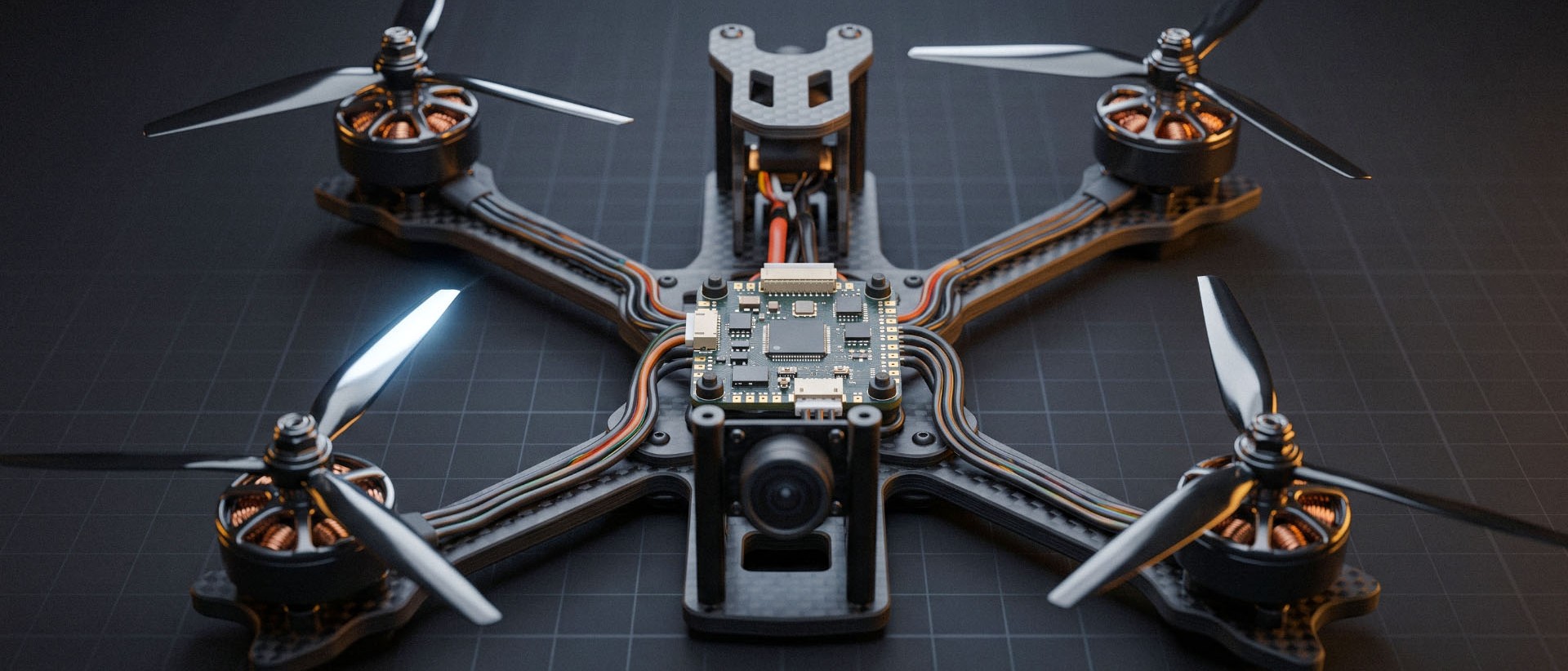
The reference sample. Before a series starts, a reference unit is assembled and approved by the customer – a physical aircraft every workstation checks itself against. Experienced assemblers from different schools work to one sample rather than each to their own habit – and that is what turns a sum of individual experiences into a repeatable result.
Incoming inspection. Every component is checked before it reaches the line – defects are filtered out at the entrance instead of surfacing at the flight range. For a series, that is the difference between "the line stopped for a day" and "the batch went back to the supplier and the line never noticed." More on the incoming inspection page.
Per-operation standards. A pace of up to 33 drones per hour is not a record of enthusiasm – it is the sum of measured operations. When the pace is broken down into steps, any shift lineup can reproduce it – and that is what lets us promise the customer a deadline instead of "we'll see how it goes."
The numbers today
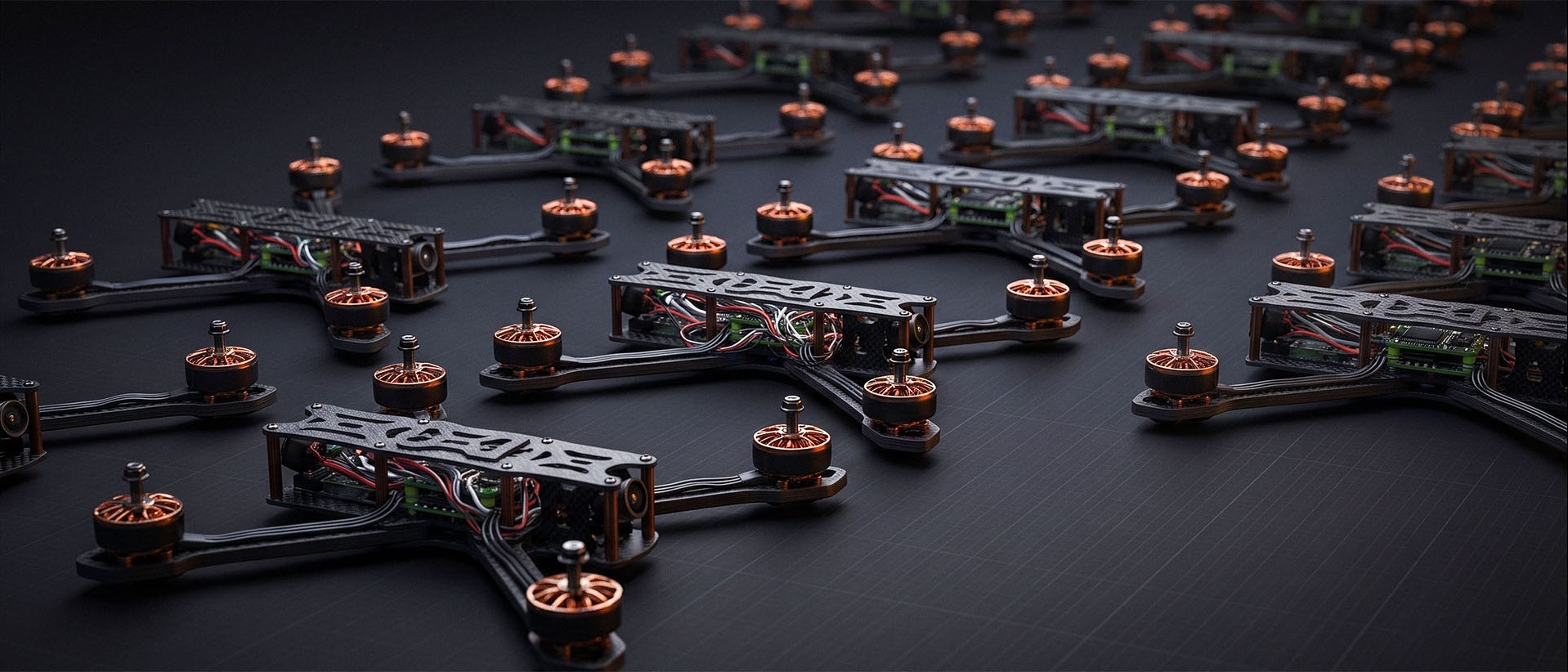
The line: 18 workstations on 110 m², with ESD protection and temperature-controlled soldering stations. The base pace is up to 33 drones per hour; stable output is over 5,000 drones a month. The permanent team of 25 specialists scales up to 70–80 people for a contract – the mechanics of that expansion are described on the serial production page.
Every aircraft stays traceable: its own log and test results – a bench test and a flight check against the acceptance criteria recorded in the customer's technical specification.
What this means for the customer
The scaling story is not about us – it is about predictability for you. The lead time of your series is not "estimated by eye": it is calculated from the standard multiplied by the line configuration. The quality of the first thousand and the fifth thousand is the same, because it rests on the reference sample and inspection, not on the mood of a shift. And if your components arrive unevenly – the line has been through that and knows how to reschedule operations without stopping.
Frequently asked questions
How long did it take to scale to 5,000 a month?
Three months from the start of the line to stable volumes. Most of that time went not into equipment but into the training system, building processes and letting the team gel – people arrived with experience, and the task was to merge that experience into one predictable pace.
Did the defect rate grow when the line reached volume?
No. Quality control processes were built from day one, before scaling, not after – it was the system that got scaled, not chaos. The core principle is unchanged: no product with an assembly defect reaches the customer – every aircraft passes a bench test and a flight check before shipment.
Ready to verify this on your own batch – start with a pilot series: paid, at the regular price, with a log for every aircraft.